
Faculty, Alumni

Winter 2021 Issue

Margaret Dresselhuys, a WashU sophomore, is not a science major. But her love for biology in middle and high school motivates her to continue learning about science. It also influenced her decision to enroll in Professor Heather Barton’s Biology in the News course last academic school year. The course, designed for non-science majors and offered in the spring semester, grabbles with the difficult question: how do we talk about biology with the general public?

“Microorganisms have evolved a bewildering array of techniques to obtain nutrients from their surrounding environments,” Bose said. “Perhaps one of the most fascinating of these feeding techniques uses microbial electrosynthesis (MES). Here we have harnessed the power of microbes to convert carbon dioxide into value-added multi-carbon compounds in a usable biofuel.”

The WashU campus has been bustling all semester! Students returned to in-person classes, and many activities resumed on campus. It has been refreshing to watch migrating students walk past Rebstock Hall at the top of each hour. Our hallways are again filled with chatter, laughter, and, of course, talk of exams, class registrations, and living arrangements.
Over the past nine months, the Biology Department was involved in Arts & Sciences' strategic planning process, a comprehensive school-level strategic planning effort. Many of our faculty, staff, and students provided feedback and discussed the actions that we need to take to achieve excellence. On December 6th, during a kickoff event for the “Power of Arts & Sciences,” a weeklong series of virtual events highlighting the launch of the strategic plan, Chancellor Andrew D. Martin announced WashU's plans to construct a new state-of-the-art building for Arts & Sciences. The Biology community is excited to be part of these transformative changes.
As we welcome 2022, we wish you a happy and healthy new year!
We hope you can take a minute to update us on your personal and professional accomplishments. We also welcome you to share your memories of your time spent at Washington University.

“There is an increased response in listeners to words — or in this case, electrical pulses — that happens right after a pause,” said Bruce Carlson, professor of biology in Arts & Sciences and corresponding author of the study published May 26 in Curr...

In the 1940s, Streptomyces griseus gave us streptomycin, the first bacterial antibiotic that revolutionized the treatment of pulmonary tuberculosis. Fast forward to 2021 and an untapped trove of desirable drug-like molecules still remains hidden in S...
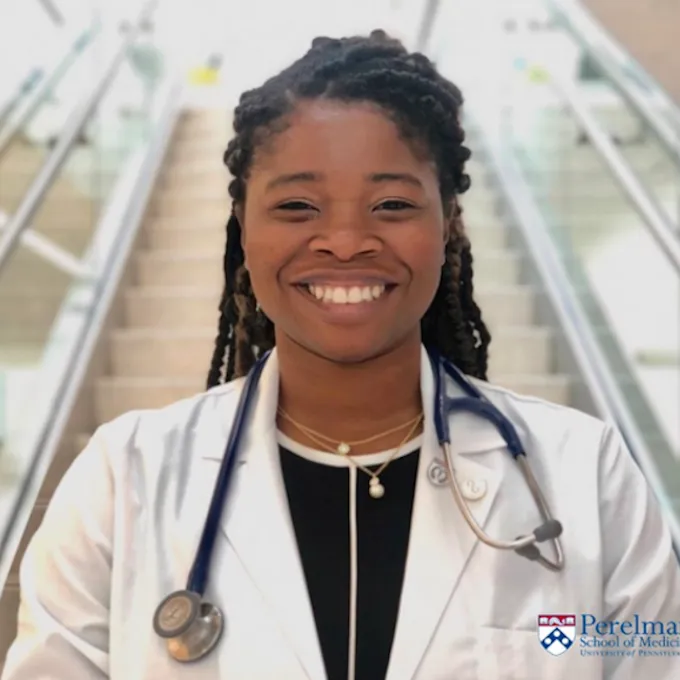
Jasmine Brown is the author of "Twice as Hard: The Stories of Black Women Who Fought to Become Physicians, from the Civil War to the 21st Century."
Professor Emerita Ursula Goodenough was elected to the National Academy of Sciences
Undergraduate Miriam Silberman was awarded the Professor Garland Allen Prize