The Venture Fellows Program is relatively new and available to Washington University postdoctoral researchers, sponsored by WashU’s Office of Technology Management (OTM) and BioGenerator. The program offers an intensive 6-month curriculum that provides experiential learning in venture capital investing and company creation. Fellows work alongside entrepreneurs, investors, and faculty in the St. Louis ecosystem. In addition, the program offers exposure to biotech startups, with hands-on training to develop capabilities across the spectrum from deal flow generation to exit opportunity evaluation.
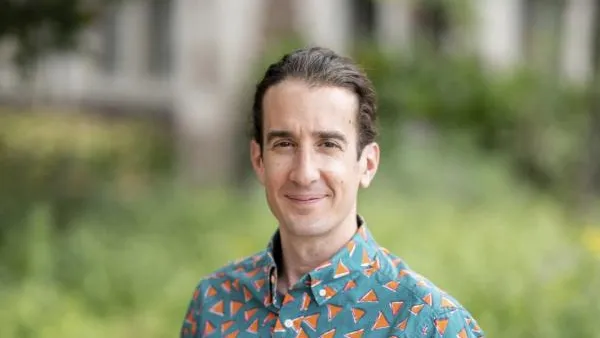
Jae Morris, postdoc in the Jez Lab, applied last year and is excited to spread the word about her positive experience. Joe Jez, an enthusiastic supporter of career development for his lab members, happily gave his approval for the application. There were four postdocs in the program—one biomedical engineer from the med campus, one from the chemistry department, one from the biology department (Morris), and a neurosurgery resident.
“The first half of the program is geared toward learning by interviewing existing entrepreneurs through the WashU ecosystem—PIs that have startups or were formally associated with WashU, or at the very least in the St Louis area. We completed a course on how to start a business through the Missouri Small Business Development Center, taught by University of Missouri Business Development Specialist Ed Lahue. We learned about the elements essential to starting a business, basics on putting something together that will work, and learning how to find and talk to your customer. We also read textbooks, including Venture Deals, on how startups can obtain venture funding. We talked about how to get a grant for a startup and other alternatives to venture funding,” Morris said.
“The formal learning was great, but by far the most valuable part of the program was the opportunity to engage with the dedicated and passionate program organizers Karen Mullis and Liz Peek, of the OTM New Venture team, as well as Dave Smoller, an entrepreneur in residence at BioGenerator. Their enthusiastic willingness to share expertise gleaned from decades of experience in the innovation ecosystem – from pharmaceutical development to funding acquisition to serial entrepreneurship – is really what makes the program shine. They were always ready to answer questions and introduce us to members of their professional network. I’m so grateful for their mentorship.”

During the educational period of the program, the postdoc team met 20 or 30 entrepreneurs, some of which were already successful, and some that were brand new. The postdoc team heard several pitches from startups and picked one they thought was interesting.
“We joined an AI company from the School of Medicine as volunteers, where they're trying to predict breast cancer risk using existing mammography images. We helped put together key parts of their business plan, supported by our mentors. We met regularly at Cortex to run through pitch decks, and focus on different aspects, like what problem the startup is solving, how big the market is, how much funding is needed, etc. After a break in December, OTM gave us a list of all the technologies divulged to them from inventors at WashU that they're interested in supporting.
“Then we were allowed to either pick an idea from that catalog and try to turn it into a startup or run with our own concept. Two of the fellows worked together on an implant designed to help with weight loss. I picked a technology based on a concept from the Jez Lab, something funded by a Danforth seed grant the year before. I realized this concept could be applied commercially,” Morris said.
Morris’s project, Fragment Foundry, focuses on the discovery of novel crop protection ingredients using the power of structural biology. Fragment Foundry’s goal is to address the issue of herbicide-resistant weeds, a result of outdated practices developed over four decades ago, leading to crop loss of up to 40% each year, a $300 billion cost overall.
“We use a high throughput method of structural biology that allows you to take plant protein, crystallize it, and expose it to thousands of little pieces of molecules. You can throw 10,000 fragments at this protein, and you might get 100 of them to bind. Using X-ray crystallography, you can see where the little fragments are bound, and then computationally see how they could assemble to form a larger molecule. The goal with the Danforth Seed grant was to identify the biologically relevant substrate inhibitor or effector for a particular enzyme, but I realized we could use the same technology to design novel molecules. We could look at an essential protein from a weedy plant or pest that is currently a problem in agriculture and design an herbicides or pesticide to match. Since these molecules would be rationally designed for precise binding, they could be made more effective and safer for the environment than existing solutions”, Morris explained.
This project is the culmination of a lifetime of passion for science. Morris was born in Quebec, Canada, then moved to Alberta at age 12. She completed her undergrad in Molecular Genetics at University of Alberta in Edmonton and earned a PhD in Biochemistry at University of Calgary.
“I was always interested in genetics. The earliest thing I can remember is learning about Dolly the sheep clone in 7th grade science class. Being from a small high school without a fancy lab, I was fortunate to get into a one-week summer course with molecular biology capabilities. We got to do PCRs, basic cloning, and ran gels. It was super exciting. From that point on, I knew that's what I wanted to do.
“I hadn’t thought about what kind of organisms I wanted to work with until I completed an internship at a tree farm in college. The Canadian government used to run a program where they bred, grew and gave trees to farmers to prevent conditions that lead to problems like the Dust Bowl. Experience working with science staff breeding the trees and determining which ones were best suited for the climate was eye opening for me. While most other students in class focused on human genetics, I found the variety and longevity of potential research projects with plant genetics to be more appealing. This was solidified when I moved to St Louis, where there's a huge agriculture industry. Being part of the Venture Fellows program exposed me to even more people in the area that have experience in these fields. It really expanded my network,” Morris said.
Learn more about Morris’s research in the Jez Lab at https://sites.wustl.edu/jezlab/research/. Learn more about how to apply next year for the Venture Fellows Program at https://otm.wustl.edu/about/venture-fellows-program-for-postdocs/.